In the last post, I covered the first four weeks of training, my recovery from IT Band Syndrome, and my baseline VO₂ max and lactate threshold testing.
This week, we’ll cover Weeks 5 and 6, most of which took place aboard a cruise ship.
Training at Sea
Immediately after Week 4, my family embarked on a seven-night Alaskan cruise aboard the Emerald Princess, sailing from Vancouver. During the trip we visited Juneau, Skagway, Endicott Arm, Ketchikan, and spent several days at sea.


Despite being on vacation, I didn’t miss a single scheduled running or strength session.
Looking back, I was pleasantly surprised by how well marathon training can fit into a cruise holiday with enough planning.
The Cruise Ship Gym
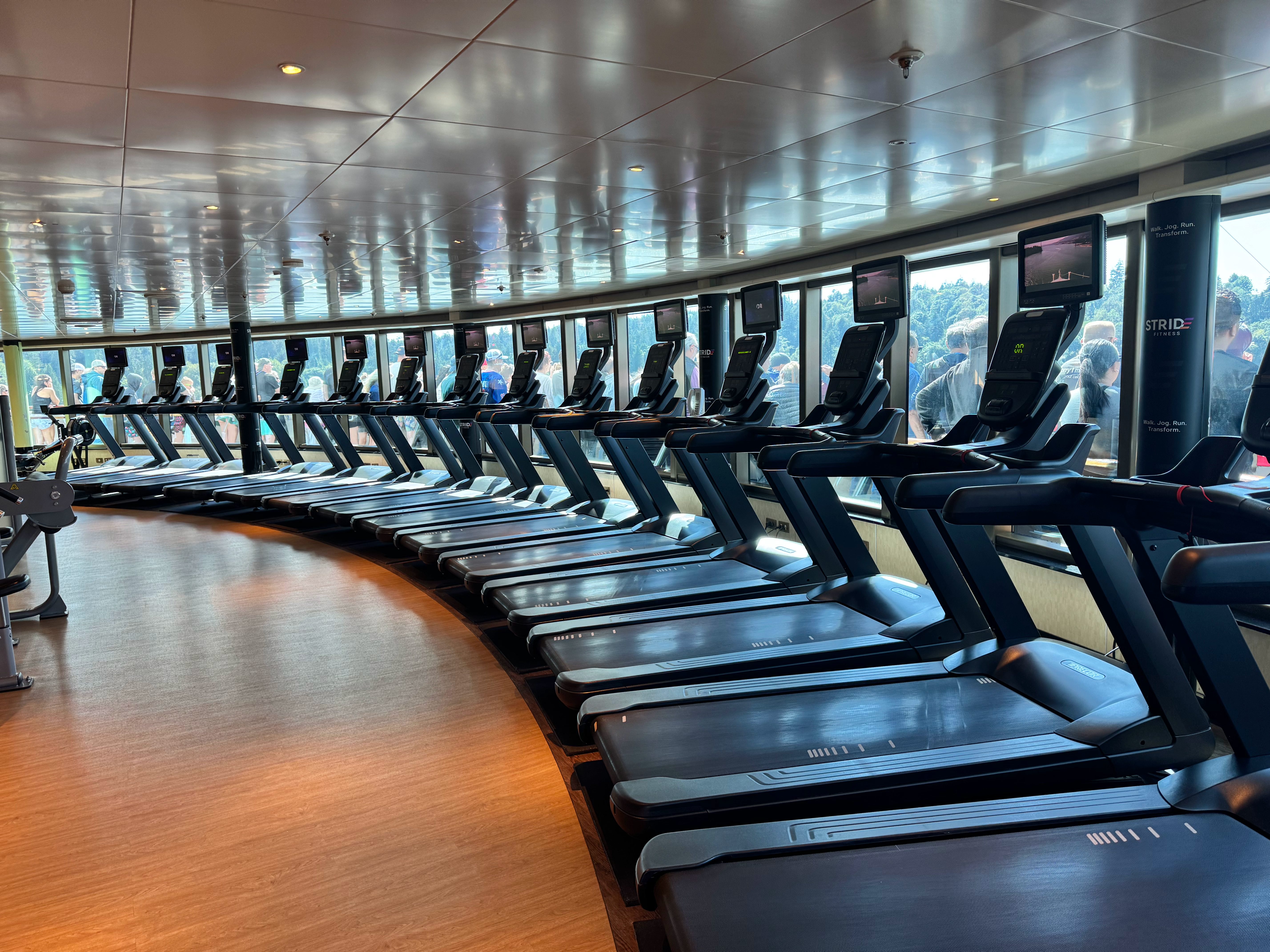
Most of my runs took place in the ship’s fitness centre.

Located at the front of the ship, the gym featured floor-to-ceiling panoramic windows overlooking the ocean. It was usually quiet enough that I often had the place almost entirely to myself.
I always chose the centre treadmill, partly because it gave me the best view, and partly because it felt like I was personally powering the ship toward Alaska.
Watching the ship pass beneath the Lions Gate Bridge, cruise through glaciers, and weave between icebergs made treadmill running surprisingly enjoyable. I normally dislike treadmills, but this was an exception.

One unexpected challenge was that the ship constantly swayed beneath my feet. The movement wasn’t severe, but it required continuous balance adjustments, making the run more engaging than a normal treadmill session.
The gym itself was excellent. It included dumbbells, barbells, Smith machines, cable equipment, and a large stretching and yoga area. The only things I found missing were a pull-up bar and dip station.
Overall, it was one of the better cruise ship gyms I’ve encountered.
There were a few minor annoyances.
The treadmills automatically stopped after one hour, forcing me to restart them during longer runs. They also displayed only imperial units, which made pacing unnecessarily awkward for someone who thinks almost exclusively in kilometres. Finally, ventilation wasn’t ideal, and the gym became noticeably warm during harder workouts.
None of these were major complaints, however. Overall, the facilities exceeded my expectations.
The Outdoor Running Track
The ship also featured an outdoor running track, which I naturally had to try.
Unfortunately, it wasn’t nearly as enjoyable.
Rather than forming a continuous loop, the track ended at the bow of the ship, requiring runners to climb a flight of stairs before continuing. After a few laps, I found this frustrating enough that I simply turned around each time instead.


Even more problematic was that part of the track passed directly through the ship’s designated smoking area. Running to improve health while breathing second-hand smoke wasn’t exactly what I had in mind.

The track was also shared with many passengers out for leisurely walks, making faster running almost impossible. Constant weaving, stopping, accelerating, and avoiding pedestrians quickly became tiresome. I also noticed that parts of the surface became slippery when wet.

I only used the track while the ship was docked. I imagine running there while the ship was moving would have been even more challenging.
Overall, it was an interesting feature—but given the choice, I’d happily choose the treadmill every time. There was also a 100-meter circular running track on the ship, but at only 100 metres per lap, it wasn’t practical for marathon training.
The Real Challenge: Logistics
The biggest challenge wasn’t the workouts themselves.
It was finding the time to complete them.

The gym operated from 6:30 a.m. to 10:00 p.m. Most shore excursions began early in the morning, while the best entertainment happened in the evenings. That left surprisingly small windows for training.
Many mornings involved starting my run the moment the gym opened and finishing just before my children woke up for breakfast and our day’s excursion.
My Sunday long run presented an even bigger logistical puzzle. The session lasted approximately 2½ hours, meaning my family had to leave the ship without me while I finished running. I then met them afterward in port.
I had originally hoped to run through each of the cities we visited, but our excursion schedule simply didn’t allow it.
In the end, everything worked out—but it definitely required careful planning and a supportive family.
Nutrition at Sea
The second major challenge was nutrition.
Cruise ships are famous for unlimited buffets, and it’s easy to understand why many people gain weight during their vacation.
To make matters worse, the food aboard the Emerald Princess was genuinely excellent.
Fortunately, I managed to stay remarkably disciplined.

Throughout the trip I focused primarily on whole foods, choosing lean proteins, vegetables, fruit, and minimally processed carbohydrates. On the final evening, I rewarded myself with a slice of apple pie—but that was it. No ice cream. No mindless snacking.
I also weighed myself before and after the cruise, and actually lost one pound during the trip. I’ll happily count that as a victory.
A Glimpse Into a Professional Athlete’s Life
This trip also gave me a small glimpse into what life might feel like as a professional athlete.
For nearly a week, I was almost completely disconnected from work and the internet.
Instead, my days revolved around training, recovery, nutrition, sleep, and spending time with my family.

Without the usual stresses of work and daily life, I noticed a significant improvement in both my recovery and overall fatigue. My legs consistently felt fresher from one workout to the next.
It reinforced something I’ve mentioned before:
Training stress doesn’t exist in isolation. Life stress counts too.
Back on Land
Once we returned home, training continued exactly as planned.
Every session was completed according to my coach’s prescription, and so far everything has gone smoothly. Touch wood, I remain injury-free.

I do have some mild discomfort in my left shin and midfoot that I’m monitoring closely, but at this point it feels more like something to keep an eye on than a true injury.
I’ve also begun reintroducing easy Zone 1 cycling to build additional aerobic fitness without increasing impact on my legs.
Week 6 concluded with a 25-kilometer long run.


Encouragingly, my Garmin-estimated VO₂ max has begun climbing again, suggesting that my fitness is finally returning after the post-marathon setback.
I also learned another valuable lesson.
During my last couple of long runs, I underestimated my hydration and electrolyte needs. By the end of both runs I felt noticeably light-headed, making it clear that I need to pay much closer attention to fluid replacement as my training volume increases.
Overall, I’m encouraged.
The fitness is returning—although I’m certainly not yet back to where I was before the Vancouver Marathon.
Current weight: 67 kg.
Progress continues.
Looking Ahead
Next week I’ll continue documenting the next phase of training as the mileage builds and marathon-specific workouts become increasingly demanding.
Leave a Reply