
“Dr. Dai, I am barely eating anything. Why am I still gaining weight?”
This is a question I get asked all the time in my busy family practice.
In Part 3.4 and Part 3.5, we discussed ways to modify the “calories-out” side of the equation through physical activity—whether through low-intensity cardiovascular exercise like walking, or through resistance training and changes in body composition.
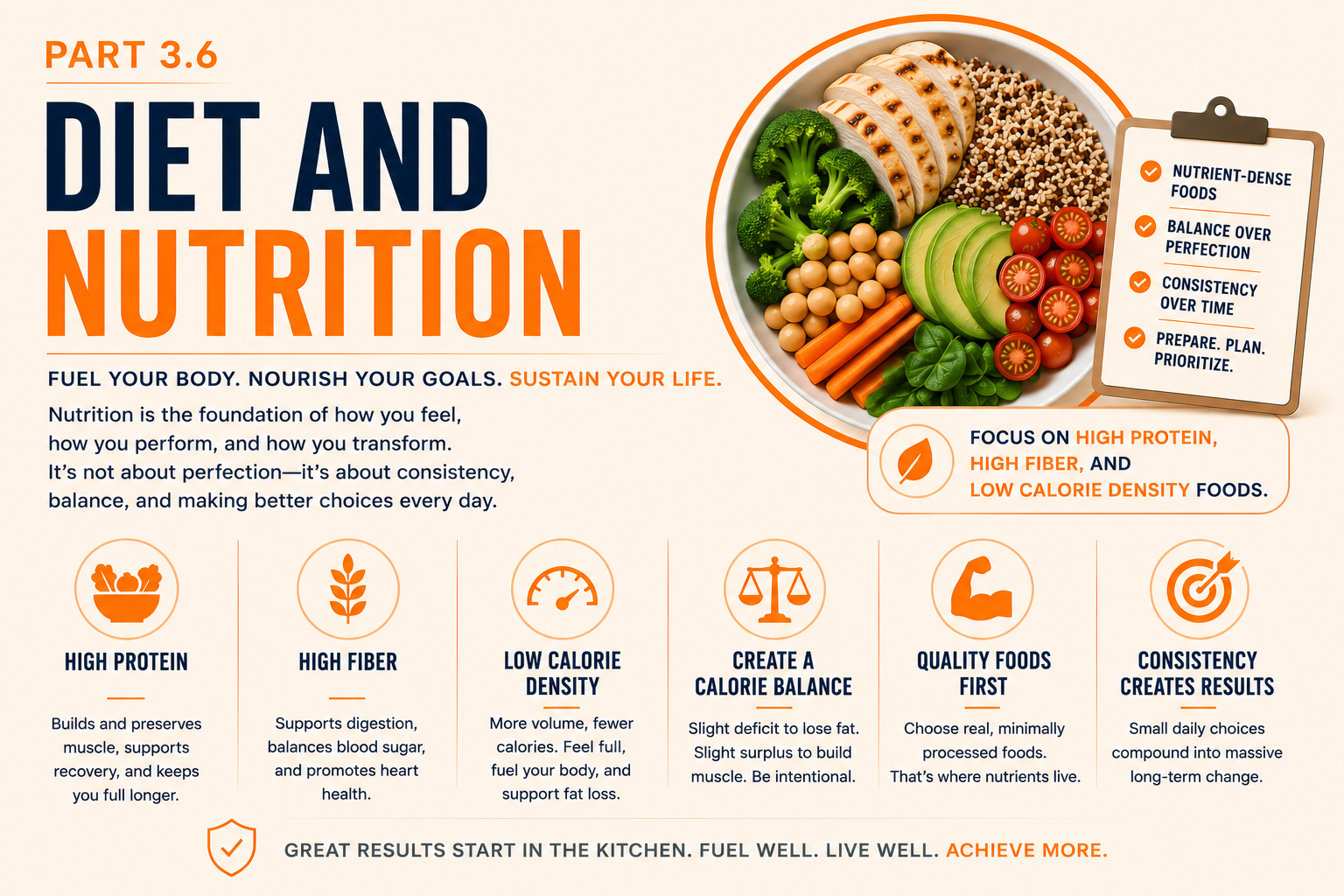
In Part 3.6—the final part of this weight loss mini-series—we will discuss another enormous topic that honestly deserves a blog series of its own, and perhaps the single most important component of weight loss: Calories In: Diet and Nutrition
A Disclaimer
Before we begin, I want to acknowledge that everyone has different:
- cultural backgrounds,
- religious practices,
- ethical beliefs,
- personal preferences,
- medical conditions,
- and physiological responses to food.
I fully recognize and respect that.
What I am presenting here is a general framework for understanding nutrition and weight management. For simplicity, I will assume the reader has no dietary restrictions. You are absolutely welcome to adapt these concepts to suit your own circumstances and values.
The One Rule That Applies to Everyone
Regardless of genetics, body type, culture, or dietary philosophy, there is one fundamental law that applies universally:
Weight loss occurs when:
Calories Out > Calories In
And:
3,500 calories ≈ 1 pound of fat
If you need a refresher, you can revisit Part 3.0.
If you feel these principles “do not apply” to you, then in the overwhelming majority of cases, the issue is inaccurate data collection rather than a violation of thermodynamics.
Why Weight Loss Can Feel Confusing
The difficulty is that none of the variables involved are static.
Recall from Part 3.0:
TDEE = BMR + NEAT + TEF + EAT
Changes in one component affect the others.
For example:
- increasing exercise volume can alter hunger,
- fatigue can reduce spontaneous movement (NEAT),
- changes in body composition can alter BMR,
- and different foods influence TEF differently.
The goal is not to obsessively calculate every variable with perfect accuracy.
The key takeaway is this:
If you are consistently not losing weight—or even gaining weight—despite increasing activity levels, then unless you have a significant underlying medical condition (which is far less common than people think), you are likely consuming more calories than your body is using.
“But I Barely Eat Anything”
So let’s revisit the original question:
“Dr. Dai, I am barely eating anything. Why am I still gaining weight?”
The simple answer is:
“Because you are still consuming more calories than your body is burning.”
I say this factually, not judgmentally.
But the full answer is more nuanced.
Focus on Food Quality Before Food Quantity
If there is one major takeaway from this post, it is this:
Focus first on the quality of your food, not the quantity.
In other words:
Pay more attention to what you are eating than simply how much you are eating.
Once food quality is optimized, then you can begin refining:
- quantity,
- timing,
- and overall calorie intake.
The Food Quality Continuum
One of my favourite nutrition books is:
The New Rules of Marathon and Half-Marathon Nutrition, by Matt Fitzgerald.
I have gone through this book more than 10 times and still continue learning from it.
Do not let the title scare you away. You do not need to be a marathon runner to benefit from it. The nutritional principles apply broadly to everyday health and wellness.
In particular, Chapter 2—“Getting Lean”—had a major impact on me.
Matt Fitzgerald introduced the concept of a:
Food Quality Continuum
He categorized foods into descending order of nutritional quality:
Higher Quality Foods
- Vegetables / Legumes
- Fruits
- Nuts and Seeds
- Fish / Lean Meats
- Whole Grains
- Dairy
Lower Quality Foods
- Refined Grains
- Fatty Meats
- Sweets / Alcohol
- Fried Foods
The idea is simple:
- eat more foods from Category 1 than Category 2,
- more from Category 2 than Category 3,
- and so on.
By “more,” we mean more servings.

Why This Works
What many people discover is that if they truly prioritize foods higher on this continuum and simply eat until satiety—not stuffed, just no longer hungry—they will often naturally lose weight over time even without meticulous calorie counting.
Why?
Because higher-quality foods generally contain one or more of the following:
- High protein content
- High fiber content
- Low calorie density
Let’s discuss these individually.
High-Protein Foods
Examples include:
- fish,
- lean meats,
- legumes,
- low-fat dairy products.
Protein is:
- highly satiating,
- slower to digest,
- and essential for muscle repair and maintenance.
Ask yourself:
How much chicken breast or steak can you eat before feeling full, compared to candy or white rice?
Protein tends to produce fullness with fewer calories.
Protein also has a high Thermic Effect of Food (TEF), meaning the body burns more energy digesting it.
For muscle maintenance and recovery, aiming for approximately:
- 0.8–1.2 grams of protein per pound of body weight per day
can be helpful depending on activity level and goals.
To optimize muscle growth, prioritize protein sources rich in leucine (an essential amino acid), such as:
- lean meats,
- dairy,
- soy,
- nuts,
- and seeds.
High-Fiber Foods
Examples include:
- vegetables,
- fruits,
- legumes,
- whole grains,
- nuts and seeds.
Fiber:
- slows digestion,
- increases satiety,
- improves bowel regularity,
- improves blood sugar regulation,
- and may improve cholesterol and gut microbiome health.
For weight loss specifically, fiber helps by:
- delaying hunger,
- increasing fullness,
- and slightly increasing TEF.
Low-Calorie-Density Foods
These are foods with high volume but relatively few calories.
For example:
- 100g of cucumber contains approximately 12 calories.
- 100g of cheesecake contains approximately 320 calories.
That means cheesecake is roughly:
- 27 times more calorie-dense than cucumber.
In practical terms:
You can eat a very large volume of low-calorie-density foods before accumulating significant calories.
This is one reason vegetables and fruits are so powerful for weight management.
A Few Important Clarifications
Nuts and Seeds
Nuts and seeds are calorie-dense on paper, yet research consistently shows that people who consume them regularly tend to be leaner overall.
They contain:
- healthy fats,
- fiber,
- micronutrients,
- and moderate protein.
However, portion control still matters during weight loss.
Dairy
Choose:
- low-fat,
- high-protein dairy options
when possible.
Examples include:
- Greek yogurt (high protein, low fat ones),
- Skyr,
- cottage cheese.
These provide excellent protein with relatively lower calories. High protein, low fat dairy options can be categorized higher on the continuum.
Whole Grains vs Refined Grains
Whole grains retain:
- fiber,
- nutrients,
- and slower digestion properties.
Refined grains have much of this removed.
Examples of whole grains include:
- oats,
- brown rice,
- quinoa,
- whole wheat.
When shopping, many products marketed as “whole grain” are still heavily refined.
Look for:
- “whole grain” listed as the first ingredient,
and minimize:- added sugars,
- refined flour,
- and ultra-processed ingredients.
“Carbs Are Earned”
I often use the phrase:
“Carbs are earned.”
What I mean is:
Higher carbohydrate intake generally pairs best with higher activity levels.
This is especially true for endurance athletes.
Carbohydrates are not inherently bad—but sedentary lifestyles combined with excessive refined carbohydrate intake can become problematic for weight control.
Fruits Are Not the Enemy
Yes, fruits contain sugar—primarily fructose.
But whole fruits also contain:
- fiber,
- water,
- micronutrients,
- and low calorie density.
Fruit juice, however, removes much of the fiber and becomes far less satiating. I would categorize fruit juices under “sweets”.
Minimize Ultra-Processed Foods
Try to minimize:
- fried foods,
- sweets,
- alcohol,
- sugary snacks,
- fast food,
- processed meats,
- and highly processed packaged foods.
These foods are typically:
- calorie-dense,
- low in fiber,
- low in satiety,
- and easy to overconsume.
A simple rule I like is:
“If your great-grandmother would not recognize it as food, you probably should not eat it regularly.”
A Simple Nutrition Framework
In general:
- eat mostly whole foods,
- prioritize vegetables and fruits,
- consume adequate protein,
- choose whole grains over refined grains,
- and drink mostly water.
Health Canada’s Canada’s Food Guide is actually a very reasonable visual framework for most people.

Food Quantity and Timing
Once food quality is optimized, then you can begin refining:
- food quantity,
- and meal timing.
Hunger Is Normal
Reducing food intake can increase hunger.
And that is okay.
Hunger is not always an emergency.
Sometimes hunger simply means:
your body is in a calorie deficit.
One helpful mental shift is to stop viewing mild hunger as something purely negative.
Intermittent Fasting
One strategy for controlling calorie intake is Intermittent Fasting.
The idea is simple:
Restrict the eating window during the day.
A common starting protocol is:
16:8 fasting
For example:
- stop eating at 8 PM,
- resume eating at 12 PM the following day.
This creates:
- a 16-hour fasting window,
- and an 8-hour eating window.
During the fasting period:
- water,
- black coffee,
- and non-caloric beverages
are generally acceptable.
Initially, you will feel hungry. But over time, the body adapts surprisingly well.
As adaptation occurs:
- hunger hormones stabilize,
- fat utilization improves,
- and fasting often becomes much easier.
Some people eventually progress to:
- 18:6,
- 20:4,
- 23:1, or OMAD (“One Meal A Day”).
Personally, I often practice OMAD and usually do not begin feeling truly hungry until roughly 22 hours into the fast.
This adaptation takes time.
Exercise During Fasting
Low-intensity exercise during fasting—especially walking—can further promote fat utilization.
However:
high-intensity exercise performance may suffer during fasting because glycogen stores are lower.
This is why strategic carbohydrate intake around intense training sessions can still be beneficial.
We will discuss this more in Part 4.
In my personal weight loss journey, this is how I put everything together in practice.

For nutrition, I employed all three strategies discussed earlier: quality control, quantity control, and timing control. For most of my first year, I followed OMAD (One Meal a Day), or a 23:1 intermittent fasting schedule. This optimized fat burning throughout the day, especially when combined with progressively longer fasted walks. I timed my meals so that I would finish eating before 8 PM and then go to bed shortly afterwards. Personally, I tend to sleep better with a full stomach, although everyone is different.
No, I do not worry about eating a large meal right before bed, because I understand that as long as calories-out remains greater than calories-in over time, my body weight will decrease. The overall energy balance across days and weeks matters far more than the specific timing of meals. I also find that eating a large meal in the evening supports recovery and helps me sleep better. During sleep, the body enters a prolonged recovery and repair state, and having sufficient protein and nutrients available may help support muscle repair and growth after all the exercise during the day. This routine worked very well for me personally, although meal timing and eating patterns can vary greatly from person to person.
I would wake up around 4 AM, use the washroom, weigh myself, make a black coffee, and begin stretching. This became my morning ritual. Around 4:30 AM, I would begin my resistance training routine, usually consisting of 5 exercises with 4 sets each, for a total of 20 sets. I preferred doing resistance training in the morning because these exercises are relatively high intensity and rely heavily on glycogen for fuel. Since I had eaten dinner the night before, I still had sufficient glycogen stores available despite fasting overnight. If I waited until later in the day, my glycogen stores would be more depleted and my workouts would suffer.
After strength training, which usually took about 1.5 hours, I would begin walking. I tried to get most of my steps completed before my children woke up around 8 AM, and then I would continue to add smaller walks throughout the rest of the day whenever possible. Walking is low intensity and can be performed comfortably even in a glycogen-depleted state, making it an excellent tool for sustained fat burning.
Throughout the day, I stayed hydrated with water, black coffee, and electrolyte tablets.
For dinner, I prioritized foods higher on the Food Quality Continuum. My go-to foods included grilled chicken breast, large amounts of fruits and vegetables (mostly raw), a handful of nuts and seeds for healthy fats, and approximately 650 grams of high-protein, low-fat Greek yogurt, usually the Kirkland brand from Costco. Altogether, I often consumed close to 2 kilograms of fruits and vegetables daily because of their high volume, fiber content, and low calorie density.
I rarely consumed foods from the lower-quality categories unless it was a special occasion, such as a birthday where I might enjoy some cake. Being disciplined most of the time allowed me to indulge occasionally without guilt.
I also controlled quantity by measuring all of my food—and by all, I truly mean everything. I carried a food scale with me almost everywhere and logged my daily calorie and protein intake. This helped keep me accountable and ensured that I consistently ate below my TDEE. On days when I needed a mental or physical break, I would intentionally eat at maintenance calories, knowing that at least my weight would remain stable.
Over time, I found this routine surprisingly sustainable. Eventually, I would not even begin to feel hungry until around 22 hours into my fast. Because my one daily meal was large, high in protein, high in fiber, and high in volume, I felt very satiated, and each meal genuinely felt like a feast.
This system worked very well for me, but the exact routine may or may not work for you. You can use my approach as a guide, but ultimately, you should experiment and find a sustainable system that fits your own lifestyle, preferences, and goals. Regardless of the specific method used, the three fundamental principles of dietary control—quality, quantity, and timing—still apply universally.
Final Thoughts
This concludes the weight loss mini-series.
I have tried to simplify these concepts as much as possible without oversimplifying the science behind them.
In future posts, I plan to write in more detail about:
- reading food labels,
- tracking macros,
- meal preparation,
- grocery shopping,
- intermittent fasting,
- and what my own daily nutrition looks like,
- and much more.
Be patient.
Stay curious.
Be willing to learn.
Trust the process.
Long-term consistency almost always beats short-term perfection.
In Part 4, I will begin discussing how I got started with running—once my most dreaded activity, and now one of my greatest passions—and how you can begin your own journey as well.
Leave a Reply